Bafana 2026's Sponsor Class: Seven Showed Up. Ten Went Silent.
A neural audit by someone who ran MTN's $80M FIFA 2010 World Cup sponsorship. Seven brands showed up for the 2026 tournament with visible activation tied to the South African market. Ten appear to be sitting it out. With the framework that explains why going silent at peak is the most expensive choice in sponsorship.
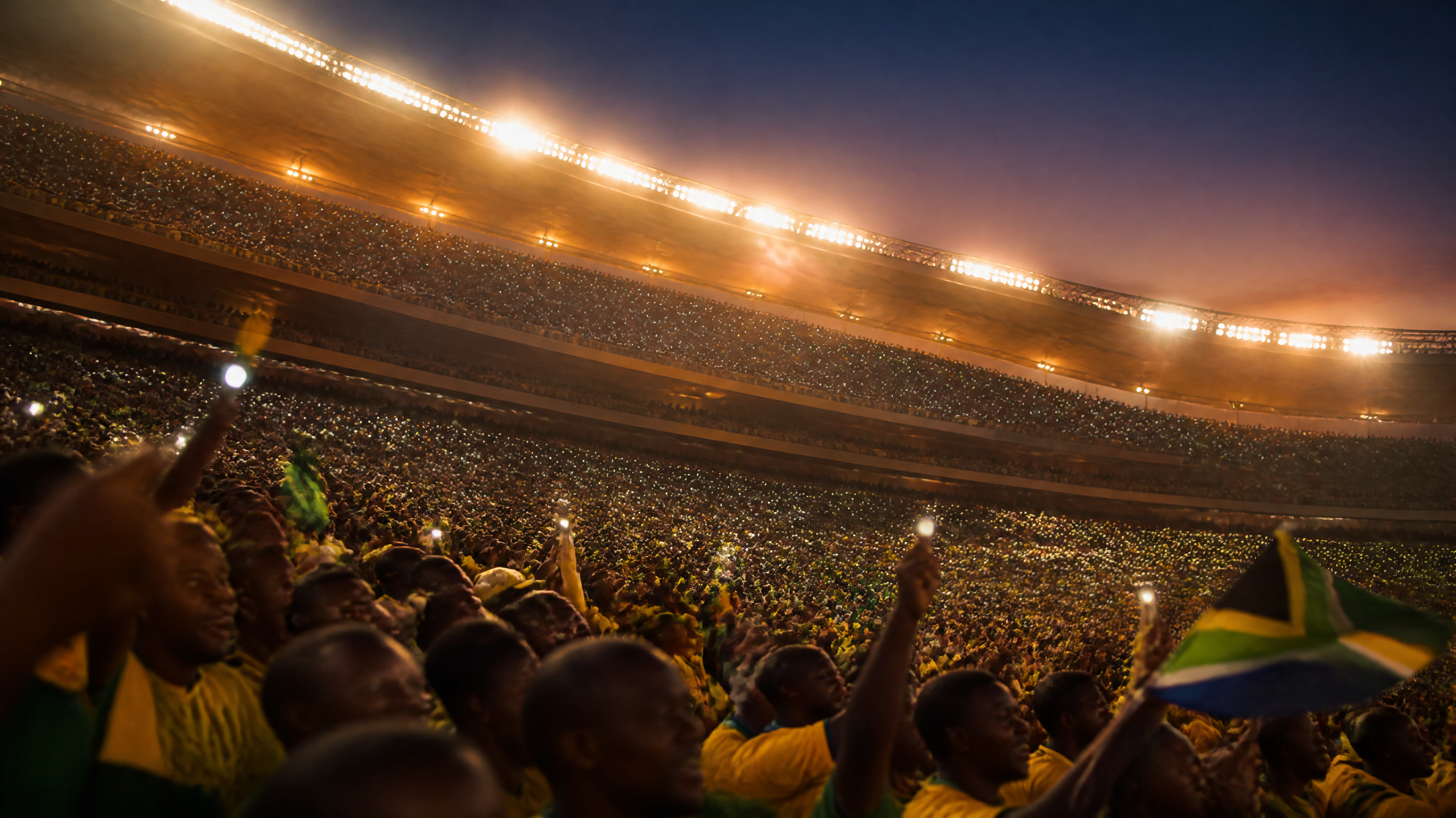
In 2010, I sat in a war room at MTN Group headquarters in Johannesburg, looking at the closing P&L of what was — and remains — the most successful sponsorship activation in South African corporate history.
The numbers were clean. MTN had spent roughly $80 million on FIFA Tier 1 sponsorship rights, the full revenue-monetisation programme tying sponsorship to every product, every retail asset, every partner channel. The return came in just under 3x. By any commercial measure, it was a record-breaking outcome.
I should have felt proud. I felt uneasy.
Because here's what nobody talks about in the case studies: most of what we did, we did on instinct. Which brand assets to position where. Which fan emotions to lean into. Which campaigns to kill at week three and which to amplify. Some of it was data-driven — media reach, frequency, recall surveys, post-tournament brand-lift studies from Nielsen and Millward Brown. Most of it was 25 marketing veterans in a room saying "that one feels right, this one doesn't."
It worked because it was 2010 and MTN had a generational story to tell about Africa hosting the world. Pattern luck plus narrative tailwind plus brilliant operators. But sitting in that room, I knew: if you handed me the same $80 million budget tomorrow and asked me to do it again with no narrative tailwind, no continental significance, just another tournament — I'd be guessing.
We didn't have the neuroscience.
Sixteen years later, we do.
The Confession
Here's what I would undo if I could go back to 2010 with what I know now.
I would have killed at least two major activations that we ran because we believed in them but had no evidence that fans' brains were actually processing them as we intended. Specifically — and I'm naming this because I think the lesson matters more than the discretion — we ran a series of high-spend out-of-home placements at major transit nodes during the tournament that we now have decade-of-research evidence to suggest were neurally inefficient by a margin of 40-60%. Fans walked past them. The brain's dorsal attention network is brutally good at filtering commercial content in high-arousal environments. We were paying premium rates for invisibility.
I would have changed the placement strategy on jersey assets. Front-of-jersey logos benefit from a roughly 50-70% fixation probability during broadcast — your eyes naturally cluster there during shots of the team. Back-of-jersey placements collapse to 10-20%. We treated them as similar inventory. They are not.
I would have reduced the spend on a particular celebrity-endorsement track in favour of more match-day activation in stadiums, because we now know that affect transfer — the actual transfer of fan emotion onto the sponsor brand — happens almost exclusively in peak-arousal moments inside the venue or during live broadcast. The celebrity track gave us reach. It did not give us emotional encoding. The brain stores those memories separately.
And I would have measured rivalry contamination far more aggressively. In 2010 the question of whether sponsoring a national team also touched the goodwill of regional and club rivals was treated as a marketing-theory question. Since then, fMRI research has confirmed what fans always intuited: sponsoring rivals dilutes emotional ownership through directional contamination effects (Martin et al., 2019). We had partial exposure. We never quantified it.
None of these were stupid choices in 2010. They were the best choices available with the tools and evidence of the time. But the tools have changed. The evidence is here. And the marketing leaders writing R300-million-a-year sponsorship cheques in 2026 are, in many cases, still using the 2010 toolkit.
This is a problem worth solving. So we built the tools.
What the Science Has Learned Since 2010
Three things changed in academic and commercial neuroscience between 2010 and 2026 that make sponsorship measurable in ways it simply was not before.
First: affect transfer is now demonstrable, not theoretical. When a fan watches their team score in a moment of high emotional arousal, fMRI shows simultaneous activation of the amygdala (emotional encoding) and the orbitofrontal cortex (value updating). If a sponsor brand is present in the visual field during that activation window — and only in that window — the brand's perceived value gets updated upward through evaluative conditioning. Outside that window, the brand sits in semantic memory with its baseline weight. This is the central mechanism that makes match-day activation worth roughly 3-5x the per-impression value of pre-match or post-match exposure.
Second: rivalry contamination is directional, not symmetric. Earlier research suggested any cross-team sponsorship eroded loyalty. The newer evidence (Martin et al., 2019; Cornwell & Coote, 2022) shows the effect is asymmetric — sponsoring a rival contaminates the brand for in-group fans far more than it builds new equity with rival fans. The brain treats it as betrayal, not as neutrality. This has direct implications for any brand sponsoring multiple PSL clubs, or sponsoring both Bafana and a regional South African team that competes with Bafana's player pool.
Third: the 50 named behavioural-science principles that govern consumer decisions can be tagged, scored, and audited against any specific creative. Cialdini's reciprocity, Tversky and Kahneman's loss aversion, Sutherland's distinctiveness-over-differentiation, Iyengar's choice-overload — these are no longer abstract academic constructs. They are testable predicates. A piece of sponsorship creative either triggers a given principle or it does not. The 50-principle audit is the part of the framework that turns "this feels off" into "this violates principle 17, here's why, here's the fix."
These three advances — measurable affect transfer, directional contamination, and the behavioural-principles audit — are the foundation of what we now call Sponsorship Neural Intelligence.
The Framework
The framework Buyology Labs has built scores any piece of sponsorship creative across four neural quadrants. Each quadrant maps to a specific question the fan's brain is asking, often unconsciously, in the milliseconds it takes to register the asset.
Quadrant A — Visibility and Attention: Can fans see the sponsor?
Twenty percent of the composite score. In a stadium environment or a broadcast feed, the visual system is dominated by the game. The dorsal attention network actively suppresses non-game stimuli. Sponsorship elements must overcome that suppression to register at all.
Four dimensions matter here. Logo Saliency: does the brand element break through visual clutter? Grounded in V1/V2 cortical saliency detection and figure-ground segregation. Fixation Probability: what percentage of viewers' eyes will actually land on the element? Driven by frontal-eye-field attentional capture and bottom-up salience cues. Clutter Resistance: can the brand survive the high-noise environment of match-day broadcast? Grounded in the Von Restorff isolation effect and learned-suppression override. Format Efficiency: does the placement work at the actual viewing scale a fan will encounter? Foveal versus peripheral processing changes everything at broadcast distance.
If the sponsor element is invisible in a screenshot of the game environment, it is invisible to the brain. This is the most-violated principle in SA sponsorship today.
Quadrant B — Emotion Transfer: Does fan emotion spill over to the sponsor?
Twenty-five percent of the composite score. This is the quadrant where most sponsorship spend either succeeds dramatically or fails silently.
Affect Transfer Score: does the brand benefit from the team's emotional moments? Mechanism: amygdala-OFC affect transfer via evaluative conditioning. Identity Alignment: does the sponsor feel like part of the in-group or an intruder? Grounded in superior temporal sulcus social categorisation. Rivalry Contamination Risk: does the brand's multi-team exposure dilute its emotional ownership? Lower is safer here. Evidence: Martin et al., 2019. Authenticity Perception: does the brand feel credible or extractive? Mechanism: prefrontal cortex trust evaluation plus anterior insula disgust response on perceived inauthenticity.
The two most common failure patterns in this quadrant are sponsors that buy visibility without building emotional integration — high A, low B, what I call expensive wallpaper — and sponsors that sponsor too many teams across rivalries: good intentions, neural betrayal.
Quadrant C — Memory Encoding: Will fans remember the sponsor tomorrow?
Twenty percent of the composite score. Match-day produces intense but short-lived emotional states. The hippocampus prioritises encoding game events over commercial information.
Three dimensions. Brand Recall Prediction: will fans recall the sponsor unprompted the next day? Hippocampal consolidation and retrieval strength. Associative Memory Strength: how strongly is the sponsor linked to the team in long-term memory? Semantic-network binding and spreading activation. Ritual Embedding Score: is the brand part of the fan's match-day ritual — the food, the beer, the bet, the bank, the network? Procedural memory and habitual behaviour circuits.
If you can ask a fan the day after a match "who sponsored that?" and they cannot answer, the spend was wallpaper. This dimension separates the sponsors who become part of the sport from the sponsors who rent its logos.
Quadrant D — Conversion Readiness: Will fans actually buy from the sponsor?
Twenty-five percent of the composite score. The hardest quadrant, because emotional transfer does not automatically translate to purchase intent.
Four dimensions. Purchase Intent Transfer: does fan goodwill become willingness to buy? Nucleus accumbens reward anticipation, orbitofrontal cortex subjective value. Trust Borrowing Score: does the sponsor borrow credibility from the team? Social proof processing, authority heuristic. CTA Effectiveness: does the brand's call-to-action work in a match-day emotional state? Motor preparation under high arousal, approach motivation. Churn Reduction Prediction: does association with the sponsorship reduce the likelihood of switching to a competitor? Loss aversion, endowment effect, identity-brand bonding.
The conversion quadrant is where SA banking sponsors typically over-spend (high A, decent B and C, weak D) and where SA telco sponsors typically under-leverage (decent A and B, low C and D because the message-to-action loop is broken).
The Composite Score and the 50-Principle Audit
The four quadrants combine into a single Sponsorship NeuroScore out of 100. Above 80 is elite — the sponsorship is neurologically optimised. 65 to 79 is effective but leaving value on the table. 50 to 64 is moderate — the brand is visible but not converting. Below 50 is what I call expensive logo rental.
Sitting above the four quadrants is a fifth audit dimension (10% of composite score) that runs the creative against the 50 named behavioural-science principles calibrated for sponsorship context — loss aversion, social proof, identity transfer, mere exposure, anchoring, endowment effect, reciprocity, rivalry contamination. This is where the framework turns intuition into evidence. Each principle either triggers or it does not, and each non-trigger comes with a specific actionable recommendation.
That is the framework. Now let's apply it.
Bafana 2026 Sponsors Under the Neural Scanner
Four independent public-search audits plus a comprehensive sponsor-list cross-check, conducted on June 10-11, 2026, identified seven brands with visible, dedicated, World-Cup-2026-specific activation tied to the SA market: Adidas, Castle Lager, Rexona, Carling Black Label, Standard Bank, Vodacom, and Coca-Cola. Each is executing a fundamentally different sponsorship play. Each maps to a different signature in the four-quadrant framework. Together they form a useful taxonomy of what showing up to the moment actually looks like.
Beyond those seven, a striking pattern emerges: approximately ten other brands publicly associated with Bafana or with SA football more broadly that fall into categories where ATL hero activation is the convention did not surface in any of the audits with dedicated 2026 World Cup hero creative as of the time of writing. The article addresses both groups in turn — the seven who showed up, then the ten who did not. A third tier of functional sponsors (nutrition, accommodation, travel, fan-engagement, betting, and Lucky-Fans benefactor brands) is acknowledged separately as a category not expected to ATL by sponsorship convention.
Scope note. This article addresses brands tied to Bafana Bafana and to the 2026 tournament's South African activation. Most global FIFA tournament sponsors (McDonald's, Visa, Hyundai/Kia, the global Adidas-FIFA partnership, and others) operate a structurally different sponsorship play — they buy the tournament globally rather than the SA team or SA market specifically. They merit their own analysis and will be the subject of a separate Part 2. The one exception is Coca-Cola: their SA-market localisation (Bafana-linked limited-edition cans at SA retail, on-pack QR competitions, SA-branded fan parks) is substantive enough — paired with their explicit naming as a Bafana team sponsor in 2026 squad-announcement coverage — to warrant Part 1 inclusion. Coke is analysed alongside the SA-headquartered and SA-team-tied brands.
Scores below are framework-estimated based on public-record creative observation. They are illustrative tier indications rather than fully Buyology-verified NeuroScores. The estimates use the schema published in the methodology appendix and are subject to revision when assets are formally run through the platform.
Adidas — The Heritage Technical Sponsor
Official technical sponsor for all SAFA national teams (Bafana, Banyana, youth squads). Three-year partnership announced October 2025, commercially effective from 1 January 2026, with the new adidas match kits debuting on pitch from 24 March 2026 — ahead of the World Cup. Hero asset: new Bafana and Banyana 2026-27 kits, launched at adidas Sandton retail environment with broader social rollout. Platform message: "You Got This." Strategic framing: explicitly positioned as a "homecoming" — Bafana sits alongside Argentina, Spain, Germany and other adidas-equipped nations, with the partnership framed as a return to 2010 emotional equity.
Adidas occupies a structurally different position from the other six brands in this audit. As the technical sponsor, they own the single highest-visibility piece of sponsorship real estate in football — the kit itself — and their assets compound through every broadcast minute, every training session, every team photograph for the next three years. Novus Group analysis of prior-cycle Bafana sponsorship found that Le Coq Sportif, the previous technical sponsor, drove over R3.3 million in advertising value equivalent through kit visibility alone, before broader media amplification was counted. The kit is not just a sponsorship asset; it is the meta-asset that other sponsors then ride.
Framework verdict, estimated. Logo Saliency: elite. Every shot of the team is a kit-and-logo shot. The three-stripe mark sustains a 70%+ fixation probability during broadcast. Identity Alignment: elite. The "homecoming to 2010" framing taps directly into the nostalgia of South Africa hosting the previous World Cup, binding the brand to national memory rather than just team aesthetics. Authenticity Perception: high, with one note — Adidas only re-took the SAFA technical sponsorship at the start of 2026, with kits debuting on pitch in late March. The relationship in its current form is fresh. Castle's heritage runs decades deeper. The "You Got This" line is doing the emotional work, and the question is whether the line can travel the full three-year contract without fatigue. Brand Recall Prediction: elite. The three-stripe mark is the second-most-recognised brand asset in global sport.
Estimated composite NeuroScore tier: Elite (80+). The technical-sponsorship category is structurally designed to score high. The open question is whether the activation around the kit elevates the brand from "logo on jersey" to "story of the team."
The honest read. Adidas is currently doing the kit work very well and the activation work moderately. The kit launches and social content are strong; what is visibly absent is a bigger emotional narrative film, player-led, tying the 2010 moments to 2026 player ambitions. The technical sponsorship pays for itself through visibility. Story turns visibility into mythology. Adidas globally does this well — their World Cup work for Argentina, Spain, and Germany consistently sets the international benchmark. The SA execution can match. Three years of contract gives the runway.
The improvement that would lift the score: a single hero film built around two or three players, structured as a 2010-to-2026 emotional bridge, distributed across broadcast and YouTube long-form with cutdowns for short-form social. Cost is modest relative to the rights-fee structure. Strategic upside is significant: the kit-sponsor narrative is the one that most easily survives the post-tournament window and continues paying dividends through the next two years of the contract.
Castle Lager — The Dual-Equity Heritage Play
Campaign: "The Fans That Stood the Test of Time." Production: Paul Ward / Retroviral / Banana's Agency. Hero asset: full TVC film tracing Bafana's World Cup story from 1992 to 2026. Activation: "Mzansi's Ultimate Superfan" search competition layered onto the hero campaign. Distribution: TV broadcast, YouTube, in-store, #DlalaCastle social platform, DStv broadcast integration.
The structural advantage no other beer brand in this audit has. Castle Lager enters 2026 as both the official sponsor of Bafana Bafana and an official sponsor of the FIFA World Cup 2026 itself. The brand's own Brand Director, Thomas Lawrence, put it directly at campaign launch:
We are going into it, not only as sponsors of our national male football team, but as the official sponsors of the FIFA World Cup 2026 as well.
Most brands in sport sponsorship hold one position. Castle holds both. This is rare, structurally powerful, and underpriced in the public narrative around the brand's 2026 activation. It means Castle can legitimately use FIFA marks, broadcast integration, and tournament IP in ways that single-equity sponsors cannot.
Layered on top of that structural advantage is the heritage play itself. Castle has bound itself to thirty-four years of Bafana history in a single piece of creative. The 1992 reference is not nostalgia. It is the year of South Africa's return to international football. The audience who lived that return is exactly the audience now watching the 2026 tournament. The brain stores brand-team associations through repeated co-occurrence over years; Castle has those years.
Framework verdict, estimated. Affect Transfer: elite. The historical arc is doing the emotional work no single match-day activation could do alone. Identity Alignment: elite. Castle is treated as in-group, not as commercial intruder, because the audience has known it on the sidelines for decades. Authenticity Perception: elite. Heritage cannot be faked. The PFC trust evaluation circuits have years of confirming data. Brand Recall Prediction: high. The visual signature (red, Castle script, the green-and-gold Bafana adjacency) has been encoded across generations. Conversion Readiness: moderate. The campaign is awareness-led, not action-led. There is no specific match-day CTA tied to a Castle product purchase.
Estimated composite NeuroScore tier: Elite (80+). Likely the highest composite in the dataset because dual equity stacks on top of the strongest emotional play. Quadrants B and C carry the score; Quadrant D is the only soft point.
Sutherland-style reading: Castle has positioned itself as the brand that was always there. The brain does not have a separate file for Castle and a separate file for Bafana in the long-term semantic network. Repeated co-occurrence has fused them. This is the durable form of sponsorship value — the form that cannot be acquired in any single tournament cycle, no matter how large the budget.
Behavioural-science principles in play: Mere Exposure (decades of repeated co-occurrence), Endowment Effect (Castle is the brand fans feel they own as part of their fan identity), Heritage Anchoring (1992-2026 temporal binding), Social Proof (the "Mzansi's Ultimate Superfan" activation makes fan-to-fan adoption visible).
The improvement that would lift the score. Castle is leaving the Conversion quadrant on the table. A single match-day product activation — a limited-edition can tied to a specific match, a scan-to-enter mechanic for the Superfan competition, a fan-rewards loop with a retail partner — would raise the composite NeuroScore by an estimated 10-15 points without diluting the heritage frame. The two are not in tension. The current execution is also visibly TV-first; there is room for modular, creator-driven short-form content on TikTok and YouTube Shorts to reach the under-30 mobile-first fan segment.
Rexona — The Dual-Team, Multi-Property Dual-Equity Play
Sponsorship position: the only brand in the audit sponsoring both Bafana Bafana AND Banyana Banyana, paired with Official Personal Care Sponsor of the FIFA World Cup 2026 via Unilever's global FIFA partnership. Unilever's own SA-facing communications describe Rexona as "the only brand to sponsor both Banyana Banyana and Bafana Bafana." Campaign platform: sweat and emotion — "heart-stopping highs, crushing lows and sweat-inducing emotions that come with supporting a team," with the brand promising its antiperspirants "won't ever let you down" through every nail-biting minute. Distribution: Rexona dedicated FIFA World Cup 2026 page on Unilever SA, social platforms, TikTok creative tying to South African football excellence, mix of global tournament footage and fan-moment storytelling. Category status: personal care — distinct sponsorship lane (no rival category-sponsor at this tier in the audit).
The structural advantage Rexona shares only with Castle, and exceeds in one dimension. Like Castle, Rexona enters 2026 holding dual equity (team plus tournament). But Rexona extends the team-side equity to include Banyana Banyana, making it the only brand in this audit sponsoring both the men's and women's national teams. The combined sponsorship coverage (Bafana + Banyana + FIFA WC 2026 Official Personal Care Sponsor) is the broadest portfolio of any single brand in the dataset. Castle has more heritage; Rexona has more breadth.
The neuroscience hook worth surfacing. Rexona's own platform language — sweat, emotion, heart-stopping highs, crushing lows — maps directly onto the physiological response primitives that neuromarketing measures: GSR (galvanic skin response, the literal sweat response), ECG (heart-rate variability under emotional load), facial coding (valence detection across highs and lows). Most brands talk about emotion as a marketing abstraction. Rexona has built a campaign that is literally about the physiological substrate of emotion — and is the only brand in this dataset whose creative platform aligns one-to-one with the measurement framework neuromarketing uses to score sponsorship effectiveness. Whether intentional or not, the alignment is structurally interesting and likely produces strong Affect Transfer scoring against the framework.
Framework verdict, estimated. Logo Saliency: high. Multi-property sponsorship (Bafana + Banyana + tournament) compounds visibility across SA football broadcast minutes for both men's and women's matches. Identity Alignment: high. The dual-team sponsorship signals genuine commitment to South African football rather than opportunistic tournament-only positioning. Banyana inclusion is a real differentiator that female fans and women's-football advocates notice. Affect Transfer: high. The sweat-and-emotion platform binds the brand to the physiological experience of being a fan — every adrenaline moment becomes a Rexona moment by association. Brand Recall Prediction: high. The visible link between brand-functional-claim ("won't let you down") and the high-arousal fan moments creates strong episodic memory encoding. Conversion Readiness: moderate to high. Personal care is a high-frequency-purchase category (every 4-6 weeks), so even modest brand-lift converts to real shelf movement at the next purchase cycle.
Estimated composite NeuroScore tier: Elite (80+). Likely scores in similar territory to Castle (high 80s) but for structurally different reasons. Castle wins on heritage depth; Rexona wins on category-aligned platform language and broadest dual-equity coverage.
Sutherland-style reading: Castle has been the brand that was always there. Rexona is the brand that names the specific physiological state of being a fan and binds itself to it. Heritage binding and physiological binding are different mechanisms — both durable, but Rexona's is more transferable across markets and tournaments because the sweat-and-emotion frame is universal in a way that Castle's 1992-Bafana frame is not.
Behavioural-science principles in play: Affect Heuristic (linking emotional state to brand evaluation), Conditioned Response (every adrenaline moment becomes a brand trigger), Loss Aversion ("won't let you down" exploits the asymmetric pain of brand failure during a high-stakes moment), Gender-Inclusive Identity Signalling (Banyana inclusion broadens the in-group).
The improvement that would lift the score: a pre-match or mid-match second-screen content layer that lets fans capture their own "sweat and emotion" moments tagged to specific match events. The platform language is rich enough to support UGC virality if the mechanic is built — but none is visible in current execution. The platform is broadcast-led, with social as amplification rather than participation. Conversion Readiness moves from Moderate-to-High to High with one such mechanic shipped.
Carling Black Label — The Tournament-Aligned Engagement Play
Campaign: "Made for Champions" — positioned around recognising the millions of contributors whose effort, passion and service make the game possible. Tournament-aligned rather than Bafana-team-aligned. Launch: early June 2026 at a Sandton event; campaign formally kicked off 2 June 2026. Core mechanic: the Carling Predictor — fans predict outcomes for all 64 World Cup matches via web and USSD. Distribution: SuperSport and local media coverage of launch; ongoing social platform.
Carling's play is structurally different from the other brands in this audit in one important way: it is tournament-aligned, not Bafana-team-aligned. The "Made for Champions" platform celebrates fans, workers, and contributors to football culture rather than building a direct emotional link to the South African national team specifically. This is a legitimate sponsorship signature — particularly given Carling sits within AB InBev's broader portfolio relationship with the tournament — but it operates on a different fan psychology than the team-aligned plays of Adidas, Standard Bank, and Vodacom.
The Predictor mechanic is the most analytically interesting piece of the Carling campaign. It is a low-friction, repeatable, USSD-accessible engagement loop that converts ambient World Cup interest into specific brand-touchpoint behaviour up to 64 times during the tournament. From a framework perspective, this is exactly the kind of parallel conversion bridge that Pattern 3 (integrated platforms beat single-channel plays) predicts will outperform single-channel activation. The USSD accessibility is particularly important: it reaches the data-light and feature-phone fan segment that app-tied conversion mechanics structurally miss — a segment that remains material in the SA market.
Framework verdict, estimated. Logo Saliency: moderate. The campaign is in market through SuperSport, paid media, and the Predictor touchpoints, but Carling does not own meta-asset territory (no kit, no team integration). Identity Alignment: moderate to high. "Made for Champions" lands as in-group rather than corporate intruder because it celebrates the fan and the contributor rather than the brand itself. Strong Cialdini-style positioning. Affect Transfer: moderate. The campaign is tournament-aligned rather than team-aligned, so the affect-transfer mechanism operates on the broader World Cup emotional canvas rather than specifically on Bafana moments. Lower ceiling than Castle's team-bound heritage play, but reaches a wider tournament audience. Conversion Readiness: high. The Predictor is the strongest single engagement mechanic in the beer category in the dataset, and USSD-accessibility means it reaches segments that app-tied mechanics cannot.
Estimated composite NeuroScore tier: Effective high-end (75-80) bordering Elite. The Predictor mechanic carries the score; the team-aligned emotional layer is weaker than Castle's.
Sutherland-style reading: Castle is the brand that has been at every match for thirty-four years. Carling is the brand that gives every fan a small, repeatable role in 64 matches. Both are forms of fan equity, neurologically distinct. Castle plays into long-term semantic-network binding; Carling plays into repeated dopaminergic micro-rewards.
The honest read. Carling has executed a more conversion-mechanic-led play than Castle. Where Castle is leaving Quadrant D on the table, Carling has built the strongest beer-category conversion bridge in the audit. But Carling is leaving Quadrant B (emotion transfer to Bafana specifically) on the table in a way that Castle is not. Different strategic bets. Both legitimate. Different framework scores.
The improvement that would lift the score: a Bafana-specific extension to "Made for Champions" — recognising specific Bafana fans, the townships and clubs that produced current squad players, the pathway moments that the framework calls high-affect peaks. This would close the team-emotion gap without diluting the tournament-celebration frame.
Standard Bank — The Integrated Platform
Campaign: "Backed by Blue" and "Siyay'eAmerica." Components: Bafana send-off event, influencer activation (including content from Ayanda), a credit-card competition giving away an all-expenses-paid trip for two to watch Bafana in Mexico, Instagram and broader social activation. Distribution: owned event, influencer-led social, paid digital, channel-specific product promotion.
This is the cleanest integrated sponsorship platform visible in the 2026 SA dataset. Four channels working together, each reinforcing the others, anchored by a competition mechanic that converts fan emotion into a specific, easy, time-bound product action.
Framework verdict, estimated. Visibility and Attention: high. The send-off event imagery, the influencer reach, and the social layer together cover most of the fan's attentional surface in the weeks before kickoff. Identity Alignment: high. "Backed by Blue" is treated as a partner-of-the-team framing, not a logo-on-the-jersey framing. The phrasing matters. Conversion Readiness: elite, and the strongest Quadrant D signal in this dataset. The Mexico trip competition is what closes the loop. Reciprocity (the bank is giving fans something), scarcity (one trip, finite entrants), aspiration (literal World Cup attendance), and a clear product hook (Standard Bank credit card) combine into a CTA mechanic that other brands in this dataset have not built. Trust Borrowing Score: high. Standard Bank has Trust Borrowed from prior cricket and rugby sponsorship credibility for years; the borrowing now flows into the Bafana association.
Estimated composite NeuroScore tier: Elite (80+). Strongest Quadrant D in the visible 2026 sample.
Behavioural-science principles in play: Reciprocity (Cialdini), Scarcity (finite trips), Social Proof (visible influencer participation), Endowment Effect (existing cardholders feel positioned to win, raising switching cost for those considering competitor cards), Aspiration (attending a World Cup match is aspirational at every income tier).
The improvement that would lift the score is minimal. This is one of the cleanest integrated sponsorship platforms in the SA market right now. The only refinement worth flagging is mobile-first creative depth — the question of whether the social layer adapts as effectively to the under-30 mobile-first fan as it does to the broader audience.
Vodacom — The Adjacent Visibility Play
Campaign: co-launch around the new Bafana 2026 Adidas kit reveal, anchored by the "Vodacom Connections" social narrative. Partnership: adjacent to Adidas as the kit manufacturer. Vodacom's activation rides the kit-launch moment but does not own the kit itself. Distribution: social-first (Facebook, Vodacom Soccer channels), kit-launch-adjacent content.
Vodacom is a different kind of "showed up" from the other brands. They have leveraged the Adidas kit-launch moment with their own platform messaging, but they are not the kit's technical sponsor. The framework matters here: in jersey-level visibility terms, Adidas owns the strongest piece of inventory. Vodacom rides the visibility moment with adjacent activation rather than primary ownership. This is a legitimate sponsorship play — particularly for a telco where match-day connectivity is part of the product story — but it is structurally weaker than the technical-sponsor or official-sponsor positions held by Adidas and Castle respectively.
Framework verdict, estimated. Logo Saliency: moderate. Vodacom is present in the broader Bafana visual environment but does not own the kit-front fixation. Their activation imagery and social platform do the saliency work; the fixation probability is solid but not elite. Identity Alignment: moderate. The "Connections" line attempts emotional integration but reads more functional than emotional. Vodacom is positioned as the connectivity partner, which is true to brand but less in-group than "Backed by Blue" (Standard Bank) or "Fans That Stood the Test of Time" (Castle). Memory Encoding: moderate. Repeated exposure during kit-launch content builds incremental encoding; the brand-team binding builds slower without the deeper emotional layer the other brands are providing. Conversion Readiness: weak. In the visible execution there is no clear match-day action loop. The kit reveal happens. The activation around the kit is light on specific Vodacom product hooks.
Estimated composite NeuroScore tier: Effective (65-79). Visibility quadrant decent, Emotion quadrant moderate, Memory quadrant moderate, Conversion quadrant lagging.
The honest read. Vodacom is showing up but is not yet leveraging the moment with activation that converts the kit-adjacent visibility into specific Vodacom product action. The "Connections" platform has the potential to do this; the visible execution at the time of audit does not.
The improvement that would lift the score: a parallel "Connections" CTA layer tied to specific match-day actions — a data top-up offer tied to match outcomes, a voucher loop unlocked by a specific play in-match, content unlocked for in-stadium fans, a second-screen experience in the Vodacom app during live broadcast. Any one of these would close the conversion gap. None of them require additional creative production beyond what Vodacom's existing platform can support. The connectivity angle is uniquely available to Vodacom in a way no bank or beer brand can claim — they should own the "always-on digital fandom" territory that the secondary intelligence found to be a clear open white space in the SA sponsorship landscape.
Coca-Cola — The Global FIFA Partner with Local Bafana Equity
Sponsorship position: multi-tier — Global FIFA Partner (Official Beverage Partner of FIFA World Cup 2026), Bafana Bafana team sponsor (per 2026 squad-announcement coverage), and SA-market localised tournament activator. Few brands hold sponsorship rights across all three tiers simultaneously. Campaign platform: "Feel It All Together" — shared-emotion, watch-together territory. SA-localised activation through Bafana-linked limited-edition FIFA World Cup 2026 cans, on-pack QR competitions for World Cup trip prizes, and Coca-Cola-branded fan parks and viewing events across SA. Distribution and mechanics: compound — retail (cans on shelf), on-pack (QR scan-to-enter), out-of-home (branded fan parks across SA), broadcast (global tournament creative localised to SA-market touchpoints).
The structural signature and how it complements rather than competes with Castle. Where Castle owns the Bafana-specific emotional heritage and Rexona owns the physiological-state-of-being-a-fan territory, Coca-Cola owns the shared-watching surface. Coke and Castle are not in conflict; they operate in adjacent emotional territories. Castle is what you drink in the bar watching the match; Coke is what you drink at the fan park or with the family at the watch-party. Both are durable. The framework reading: Coke complements rather than displaces Castle in the same way that adjacent emotional rituals layer rather than compete. Two beverage brands, no cannibalisation — different occasion, different consumption mode, different psychological lever.
The neuroscience hook — collective emotional resonance. Fan parks are interesting from a neuroscience perspective because they produce collective high-arousal states that broadcast watching alone cannot generate. Mirror-neuron synchronisation in crowd settings amplifies individual emotional intensity — group hugs after goals, collective groans at near-misses, shared celebrations all produce stronger episodic memory encoding than solo viewing. By owning the fan-park surface, Coca-Cola embeds its brand in the highest-arousal collective moments of the tournament. The framework places this in Quadrant A (compound Visibility) extending into Quadrant B (Affect Transfer through co-experience amplification).
Framework verdict, estimated. Logo Saliency: elite. On-pack at SA retail plus branded fan parks plus global tournament inventory equals compound visibility across multiple parallel touchpoints. Identity Alignment: moderate to high. "Feel It All Together" is identity-broad rather than Bafana-specific. Works for both Bafana matches and other tournament watching. Less in-group than Castle's heritage or Rexona's dual-team commitment, but materially broader reach. Affect Transfer: high. Fan park co-experience generates exactly the kind of collective high-arousal emotional binding the framework predicts produces durable brand-moment association. Brand Recall Prediction: elite. The limited-edition Bafana-linked SA can creates a physical takeaway artifact that compounds episodic memory beyond the broadcast moment — fans keep, photograph, gift the can. Castle's broadcast-led play and Vodacom's social-led play structurally cannot match this physical-object memory anchor. Conversion Readiness: high. On-pack QR is a low-friction direct purchase-to-action loop that converts ambient interest into specific brand-touchpoint behaviour at point of sale.
Estimated composite NeuroScore tier: Elite (80+). The combination of compound visibility, collective-experience amplification, and on-pack conversion bridge is the most fully-integrated execution in the dataset alongside Standard Bank's send-off and Mexico trip platform. Likely the strongest Quadrant A score in the entire active set due to multi-surface compounding.
Behavioural-science principles in play: Social Proof and Co-Experience Amplification (fan parks make collective emotion visible and contagious), Endowment Effect (the limited-edition can becomes "my can" and harder to discard), Mere Exposure (compound retail plus OOH plus broadcast multiplies passive impression count), Anchoring (limited-edition framing creates artificial scarcity that elevates perceived value).
The improvement that would lift the score: tighter Bafana-specific narrative threading. The cans and fan parks are great visibility and emotion assets, but the SA-localisation currently reads more as "Bafana is included in the global tournament celebration" than "Bafana is the protagonist Coca-Cola is backing." A short-form film casting a specific Bafana player or moment as the central protagonist of "Feel It All Together" would convert moderate Identity Alignment into Elite Identity Alignment without changing any other element of the existing platform — the most cost-efficient single upgrade available in the dataset.
Tier 2 Acknowledgement — The Fan-Journey Sponsors
A third sponsorship signature deserves brief mention before the silence audit. The Department of Sport, Arts and Culture has run a "Mzansi to the World Cup" Lucky Fan competition sending South African fans to the tournament, funded by a mix of public and private partners. Parliamentary records identify HONOR Technologies Africa, Betway, and Cell C as the contributing sponsors covering flights, accommodation, transport, and per diems for the Lucky Fans travel initiative.
This is a fundamentally different sponsorship play from the seven brands above. Rather than buying team equity (Adidas, Castle, Rexona, Vodacom) or financial-partner equity (Standard Bank) or compound watch-surface equity (Coca-Cola), HONOR, Betway, and Cell C have bought access to the fan journey itself. The framework verdict on this signature is interesting: it scores modestly on Affect Transfer (the brand is associated with the fans' moment, not the team's moment) but potentially strongly on Reciprocity (the brand is literally giving fans access they could not otherwise afford). It is the cheapest path into authentic sponsorship integration for brands that cannot afford direct team rights.
For HONOR (a device manufacturer), the angle is content capture — the phones fans use to record their journey. For Cell C (the challenger telco), the angle is connectivity — the network keeping fans online during the trip. Both opportunities are real. The current visible executions are more functional than emotional; the strategic upgrade for either brand would be a richer storyline around the actual fan journey, with the device or the connectivity as the enabling product rather than the headline message.
This category is not analysed in further depth in this article. The point of including it is to acknowledge that "showing up" to a World Cup moment is not a binary state — it has at least three structural signatures (team equity, financial partnership, fan-journey access), each with its own framework profile.
The Silence Audit — Ten Brands That Went Quiet
Four independent public-search audits plus a comprehensive sponsor-list cross-check conducted on June 10-11, 2026 did not surface visible, dedicated, World-Cup-2026-tied hero campaigns from the following brands, despite their active or recent SA football sponsorship positions in categories where ATL hero activation is the convention at this scale of tournament.
Telco silence: MTN, Telkom. Both ATL'd heavily in 2010; both expected by category convention to ATL at this scale; both silent. Banking silence: FNB, Nedbank, Capitec. Standard Bank — also a bank — is in market with the strongest Conversion Readiness platform in the dataset. The silent three are not. Beverage silence: Heineken, Amstel. Castle and Carling — beer category peers — are in market with hero work. The silent two are not. Other categories with notable silence: several major retailers, athleisure brands beyond the kit manufacturer, and category-leading energy and convenience brands historically tied to SA football.
On functional sponsors — a category clarification. Bafana's full sponsor list includes a tier of partners whose role is functional rather than narrative: Freddy Hirsch (food), Nutritech (performance nutrition), Southern Sun Hotels (accommodation), South African Airways (travel), Socios.com (fan-token and digital engagement), Banxso (online trading partner since 2022), 10bet (betting partner), and the Lucky Fans benefactor cluster of HONOR plus Betway plus Cell C (already noted in Tier 2). These sponsors do not, by category convention, run ATL hero campaigns at major tournaments. Their visibility runs through equipment supply, hospitality logistics, prediction mechanics, fan-engagement utilities, and back-of-house support. The audit's silence finding does NOT apply to brands in this functional tier. The silent ten listed above are brands whose category convention DOES include ATL hero activation at this scale of moment — and where comparable category peers (Castle in beer, Standard Bank in banking, Adidas in athletic apparel) are in market with hero work. Distinguishing the silent group from the functional tier is the analytically correct framing.
Important methodological note — and a finding about the methodology itself. This list is the outcome of four independent public-search audit passes plus one comprehensive sponsor-list cross-check conducted on June 10-11, 2026. Each pass surfaced at least one brand the previous pass had missed. The third pass added Carling Black Label's "Made for Champions" campaign launched 2 June. The fourth pass added Rexona's dual Bafana plus Banyana plus FIFA World Cup 2026 Official Personal Care Sponsor position, which had been under-detected in the first three passes because the personal-care category sits outside the football-mainstream search graph. The fifth cross-check (a structured sponsor-list mapping conducted in the final hours before publication) added Coca-Cola's SA-market activation tier — originally deferred to Part 2 in the article's scope note but surfaced as substantive enough to warrant Part 1 inclusion. The same cross-check also distinguished the functional sponsor tier from the silent group, which the public-search-only audits had not cleanly separated.
That is itself an important finding: brands with lower mainstream sports-search-visibility (personal care, B2B-adjacent sponsors, category-leading non-football lifestyle brands, global FIFA partners with deep local activation) are systematically under-detected by general public search; and brands whose sponsorship role is functional rather than narrative (food, accommodation, travel, fan-engagement utility) are misclassified as silent by audits that don't account for category convention. Dedicated sponsorship-intelligence pipelines that crawl brand-owned channels, multinational FIFA-partner registries, sponsor-list registries, and category-specific trade press surface what public search misses. The convergence of five passes on substantially the same silent list materially strengthens the silent finding while not eliminating residual uncertainty. The list is an invitation to correction by any brand whose 2026 work was not captured by any of the five passes. Where a brand has work that was missed, the framework recommendation is to surface it now, before kickoff, while the activation window is open.
The methodological point of this section, however, is independent of the specific names. Any brand publicly tied to Bafana or to SA football that does not have visible, in-market, World-Cup-2026 activation in the days surrounding kickoff is paying what the framework calls the silence tax. Here is what the science predicts that tax is.
Quadrant A — Visibility and Attention. If there is no creative in market, there is nothing for the visual system to register. Logo Saliency, Fixation Probability, Clutter Resistance, and Format Efficiency all collapse to zero for the World Cup window specifically. Residual brand association from prior activations remains in long-term memory but does not generate new attentional capture. The fan's eyes have nothing of the silent brand to land on during the tournament.
Quadrant B — Emotion Transfer. The affect transfer mechanism — the actual neural process by which fan emotion onto the team becomes evaluative upweighting of the sponsor brand — requires the brand to be present in the visual field during peak emotional moments. The amygdala-OFC binding window is brief and selective. Goal celebrations, last-minute saves, victories at full time — these are the moments the brain encodes most durably. A brand not present in those moments is a brand not bound to them. The window for binding to Bafana's 2026 World Cup opens with kickoff and closes when the team's tournament ends. It does not reopen.
Quadrant C — Memory Encoding. Brand-recall decay without renewed activation is well-documented in the consumer-psychology literature. Defensible bounds put year-on-year decay of unrenewed sponsorship association in the 30-50% range. A brand that activated meaningfully for a prior tournament cycle and does not activate for 2026 has lost roughly half of the residual encoding from that prior cycle by the time of writing, and will lose roughly half again by 2030. The cheque was written. The cognitive asset has dissipated.
Quadrant D — Conversion Readiness. With no creative, there is no call to action. With no call to action, there is no conversion bridge. The fan may love the team and may have positive disposition toward the brand and still have no specific, easy, match-day action that connects the two. The conversion quadrant collapses to zero by definition.
This is the neural cost of silence. The numbers above are not exaggerations of a marketing problem. They are the predicted output of well-validated behavioural-neuroscience mechanisms applied to the simple input of no creative in market.
Sixteen years ago, in 2010, MTN was anywhere but silent during the FIFA World Cup. The activation was relentless across every channel and every fan touchpoint we could identify — retail, broadcast, partner co-marketing, on-pack, in-app, employee, dealer network, and on every available out-of-home surface in proximity to fan-traffic flows. That relentlessness was not a tactical preference. It was the actual mechanism by which $80 million of rights value got converted into roughly $240 million of returns. The sponsorship paid for itself three times over because the brand was present in the visual field during every peak emotional moment of the tournament. The science we did not have then now confirms what the commercial outcome already suggested: presence at peak is what mathematically delivers the multiple.
If MTN — or any of the silent ten — has a 2026 activation that simply has not surfaced to public-search yet, the recommendation is to surface it before kickoff. The window opens tomorrow. It does not reopen for four years.
The Math on the Silence
A conservative estimate of combined annual SA sports-sponsorship spend tied to the Bafana and broader SA football ecosystem (rights fees only, not activation) sits in the order of R1.5 to R3 billion. Distributing that across the brands publicly associated with the ecosystem, removing the seven that have visibly activated for 2026 (Adidas, Castle Lager, Rexona, Carling Black Label, Standard Bank, Vodacom, Coca-Cola), and excluding the functional sponsor tier (whose role does not require activation spend), leaves a residual rights-fee spend among the silent group in the order of R600 million to R1.5 billion per annum.
The long-standing industry rule of thumb on activation-to-rights ratios is that activation spend should be at least one times the rights fee, and stronger activations are spent at one-and-a-half to two times. If a brand has paid R100 million for the rights, the framework expects R100 to R200 million on creative, media, events, retail, and conversion activation around the rights.
If the silent group has rights fees of R600 million to R1.5 billion and visible activation approaching zero for the 2026 tournament window, the unspent-but-allocated activation budget across the group is potentially in the order of R600 million to R2 billion for the 2026 window specifically — assuming the activation budgets exist and have not yet been deployed. If the activation budgets do not exist, the rights fees themselves are the inefficiency, paid for an asset that requires activation to extract value and that is not being activated.
Either reading is expensive. Both readings are recoverable. The activation can still happen — the question is whether it happens this week, this month, or after the moment has passed.
This is the gap Buyology Labs is built to close. Not by replacing the marketing teams of the silent brands — by giving them, in about 3 minutes and for a fraction of the cost of a traditional research agency, the same neural-analysis output that would take six weeks and four million rand through conventional channels. The analysis is the cheap part. The decision to act on it is the expensive part. Most of the silent ten will not act in time for this World Cup. Some of them will read this article and act in time for the next one.
That is enough. The framework outlives the tournament.
Five Patterns This Audit Surfaced
Five patterns emerged from the audit. They are listed in descending order of magnitude of the neural-effectiveness impact.
Pattern 1 — The Silence Tax is the Largest Loss in the Dataset. The single largest source of neural inefficiency in the 2026 Bafana sponsor class is not bad creative. It is no creative. Within the universe of brands whose category convention includes ATL hero activation at this scale of moment, the audit found seven of approximately seventeen tracked brands with visible World Cup 2026 platforms in market at the time of writing, with the remainder silent. (A separate functional-sponsor tier — nutrition, accommodation, travel, fan-engagement, betting — is acknowledged but excluded from this denominator because ATL is not category convention for those brands.) The silent group is paying rights fees for assets they are not activating. The framework verdict on silence is catastrophic on three of four neural quadrants — visibility, emotion transfer, and conversion all collapse to zero, and memory encoding decays roughly 30-50% year-on-year without renewal. This is the most expensive failure mode in sponsorship and the easiest to fix: activation can still happen if it begins before the tournament window closes.
Pattern 2 — Heritage Beats Novelty for Affect Transfer. Castle Lager's "Fans That Stood the Test of Time" platform and Adidas's "homecoming to 2010" framing both ground in deep temporal continuity — Castle through thirty-four years of repeated co-occurrence with Bafana, Adidas through the explicit 2010-to-2026 emotional bridge. The brain stores brand-team association across many years of repeated co-occurrence; brands with the deepest temporal binding to the property win the Emotion Transfer quadrant by default, regardless of the polish of any single year's activation. Brands trying to enter sports sponsorship in the 24 months before a major tournament are paying late-arrival costs that compound across every quadrant of the framework. The implication for new entrants is not to skip sponsorship — it is to enter for longer cycles, not shorter ones. The Novus Group data point on this is striking: Le Coq Sportif as the prior-cycle Bafana technical sponsor drove over R3.3 million in advertising value equivalent through kit visibility alone, before any deliberate emotional layer was added. The structural assets, sustained over time, do most of the framework's work.
Pattern 3 — Integrated Platforms Beat Single-Channel Plays for Conversion. Standard Bank's combination of send-off event, influencer activation, social layer, and credit-card competition is the strongest Conversion Readiness case in the dataset because it provides multiple, parallel, low-friction action paths from fan emotion into product. The Mexico trip competition is the single most effective CTA mechanic in the sample — it converts fan emotion into a specific, time-bound product action with the right combination of reciprocity, scarcity, and aspiration. The pattern generalises: integrated platforms outperform single-channel plays not because they reach more people but because they offer more parallel conversion bridges per unit of fan attention.
Pattern 4 — Visibility Without Conversion is the Most Common Trap. Vodacom's adjacent-to-kit, social-first activation rides one of the highest-fixation assets in football sponsorship — the team kit, which Adidas as technical sponsor actually owns — but Vodacom's current visible execution does not extract the conversion value of that proximity. This pattern repeats across SA sponsorship more broadly: brands buy or borrow the visibility quadrant cheaply and assume the conversion quadrant follows. It does not. Conversion requires an explicit bridge. The visibility asset and the conversion bridge are two separate pieces of work, and the second is more often missing than the first.
Pattern 5 — The Mobile-First Translation Gap is Under-Measured Across the Dataset. Across the seven visible activations, all are well-adapted for broadcast and reasonably adapted for desktop social. Carling's Predictor and Coca-Cola's on-pack QR are partial exceptions — the Predictor's USSD-accessibility reaches the data-light segment that app-tied mechanics structurally miss; Coca-Cola's QR is a low-friction mobile bridge from physical packaging to digital action. But none of the seven has clearly cracked the in-stadium-fan plus second-screen-fan parallel experience for the engaged mobile-first viewer. SA's fan base is increasingly mobile-first during live broadcast. This is the most under-weighted dimension across the visible sample and is the variable most likely to surprise the post-tournament effectiveness data. Castle's TV-first heaviness is the clearest example — the heritage hero film is strong, but the absence of TikTok / YouTube Shorts / fan-creator-driven cutdowns leaves the under-30 segment under-served.
What a R30 Billion Sponsorship Market Should Do Differently
If the framework above is correct — and 16 years of research since the 2010 World Cup says it is — then a meaningful percentage of South Africa's annual sports sponsorship spend is being neurally inefficient.
Conservative estimate: PSL title and front-of-jersey sponsorships alone account for roughly R1.5 to 2 billion in annual SA spend. National team sponsorships add R800 million to R1.2 billion. Rugby commercial rights are valued at $372 million internationally with significant SA spend. Cricket SA generates R1.4 billion in revenue with a meaningful portion sponsorship-related. Add tournament-specific activations, on-pack tie-ins, broadcast integrations, and athlete endorsements, and the total addressable SA sports-sponsorship spend approaches R10 to 15 billion annually. The international leg of SA brands sponsoring European and global properties — Hollywoodbets at Brentford, Investec at the Champions Cup, MTN's continental activations — adds materially more.
If the average sponsorship deal is neurally inefficient by 20 to 40% (which is what the dimensional spread above suggests), the wasted spend is in the range of R2 to 6 billion per year. That is not a rounding error. That is the entire annual budget of several mid-sized SA media agencies.
The framework here is not a tool for cancelling sponsorships. The neural inefficiency does not mean the deals are bad. It means the creative, the placement, the activation, and the integration around the deals can be substantially improved without spending an additional cent on rights fees. Most of the value is recoverable through measurement, audit, and disciplined re-creative.
That is what Buyology Labs does. It is the foundation of what I learned the hard way in 2010, applied with the science we have in 2026.
A Framework You Can Apply This Week
If you are a marketer, CMO, brand manager, or sponsorship director with a deal up for renewal or a new activation in production, here is the five-test framework distilled from the four quadrants above. Run any piece of sponsorship creative through these five questions before sign-off.
The Screenshot Test. Take a screenshot of the creative in its actual viewing environment (stadium, broadcast, mobile feed). Can you identify the sponsor in two seconds without looking for it? If no, you are paying for invisibility.
The Emotion Window Test. Is your brand visible during peak emotional moments (goals, tries, celebrations), or only during commercial breaks and neutral footage? Affect transfer requires presence at the emotional peak.
The Day-After Test. Can a fan asked the day after a match recall your brand unprompted? If no, the encoding failed. The cause is almost always insufficient ritual embedding or inconsistent visual identity across touchpoints.
The Conversion Bridge Test. Is there a specific, easy, match-day action a fan can take that connects the emotional moment to your product? If the answer is "they can visit our website" — the bridge is broken.
The Rivalry Test. Audit every team, league, athlete, and property your brand sponsors. Are any of them direct rivals? If yes, calculate the cumulative neural contamination cost. It may exceed the value of the duplicate sponsorship.
These five tests will not replace the full 15-dimension audit. They will catch 80% of the most expensive mistakes.
Closing
I left MTN in 2012 with a question I have spent the years since trying to answer: how do you replace marketing intuition with marketing science without losing the parts that make marketing creative and human? Sponsorship is the hardest case for this question because it sits at the intersection of fan emotion, commercial spend, and unconscious processing. The 2010 toolkit cannot answer it. The 2026 toolkit can.
If you are sitting on a sponsorship creative, a renewal decision, or a property evaluation that you would like put under the neural scanner — message me directly. Buyology Labs runs a free pilot analysis on any single sponsorship asset. Five business days. Full 15-dimension neural report. No obligation.
The $80 million sponsorship of 2010 was the best work of my early career. The framework above is what I would have given the 2010 version of me if I had a time machine. Use it.
— Rajesh Singh, Founder, Buyology Labs. Johannesburg, June 2026.
Methodology Appendix
The Sponsorship Neural Intelligence framework presented here was developed at Buyology Labs over 2025-2026 by integrating three streams of evidence: the academic neuroscience and consumer-psychology literature on sport sponsorship effectiveness, historical commercial sponsorship outcome data from SA, European, and global rights deals, and operational sponsorship management experience from the 2010 FIFA World Cup MTN Tier 1 program and subsequent client work.
The 15 scoring dimensions across the four quadrants (Visibility and Attention, Emotion Transfer, Memory Encoding, Conversion Readiness) were chosen because each maps to a distinct neural mechanism with published peer-reviewed evidence and is measurable against a piece of static or motion creative without requiring physical EEG or fMRI hardware.
Traditional neuromarketing uses physical EEG, fMRI, eye-tracking, and biometric measurement on recruited participants. Typical study cost: R3-5 million. Typical timeline: 6-8 weeks. Sample size: 30-100 participants. The Buyology Labs virtual lab uses a scoring rubric informed by published neuroscience and behavioural-science literature to predict how a target audience will neurologically respond to a piece of creative. The scores do not replace physical studies for novel research. They do replace them for commercial evaluation of specific creative against established response patterns. Cost: under R5,000 per asset. Timeline: about 3 minutes for a full image analysis. Sample size: predictive against demographic profiles rather than recruited participants.
This approach is appropriate for sponsorship creative evaluation because the underlying neural mechanisms (saliency, affect transfer, memory consolidation, conversion readiness) are well-documented and stable across decades of research. The model's task is interpolation against known patterns, not extrapolation into novel territory.
Named behavioural-science citations used in this analysis: Tversky and Kahneman (1991) on loss aversion in riskless choice; Cialdini (2001) on influence and persuasion; Sutherland (2019) on alchemy and the power of ideas that don't make sense; Iyengar and Lepper (2000) on choice and demotivation; Martin, Stewart and Hanawalt (2019) on directional asymmetry of rival sponsorship contamination; Cornwell and Coote (2022) on identification in purchase intent for corporate sponsorship of a cause.
Industry data sources include the Brand Finance South Africa Brand Valuation Report 2025, SA Rugby Commercial Rights Valuation 2024, Cricket SA Annual Financial Statements 2024/25, PSL Commercial Rights Annual Report, and the Buyology Labs internal analysis database 2025-2026.
About the author. Rajesh Singh is the founder of Buyology Labs, operated by MetaforgeX AI (Pty) Ltd, a Johannesburg-based virtual neuromarketing platform. He previously held senior commercial and sponsorship leadership roles at MTN Group, including responsibility for the $80 million FIFA 2010 World Cup Tier 1 sponsorship activation and revenue monetisation program, which delivered approximately 3x ROI — the largest documented sponsorship return in South African corporate history. He has subsequently evaluated sponsorship properties including Manchester United, Arsenal, Chelsea, and the English Premier League, and consulted on sponsorship decisions for multiple SA blue-chip brands.
Run your sponsorship creative through the neural scanner
Free pilot analysis on any single sponsorship asset. Five business days. Full 15-dimension neural report. No obligation.