Our Methodology
Transparency in how we predict neural responses
What We Do — And What We Don't
Buyology Labs does not simulate brain scans. We do not have access to your audience's brain activity. What we do is predict neural response patterns using a scoring rubric informed by published neuroscience and behavioural-science literature, combined with AI interpretation of your creative assets.
Our predictions are informed by the same research that guides physical neuroscience labs — we make those findings accessible without requiring R4M+ in lab equipment and 6-8 weeks of study time.
Think of it like a weather forecast: meteorologists don't create weather — they predict it using models trained on historical data. We predict neural engagement using a scoring rubric informed by published neuroscience and behavioural-science literature.
A creative score estimates properties of the asset under a defined assessment method. It does not estimate realised attention, recall, persuasion or conversion in a live placement without explicit environmental, audience, delivery and validation evidence.
Aggregation (DEC-K-001): self-serve scores are a single run (k=1). Concierge scoring uses the arithmetic mean of three independent runs (mean-of-3) — never the median — so the published repeat-scoring SEM applies without a separate calibration study. Uncertainty is shown as a repeat-scoring band (±1.96 × SEM / √k), not as a generic "confidence: N%". Constructs whose k=1 band exceeds δ_abs=5 are released as comparative-only (ordering), not as absolute point estimates.
Neural Mechanism Transparency
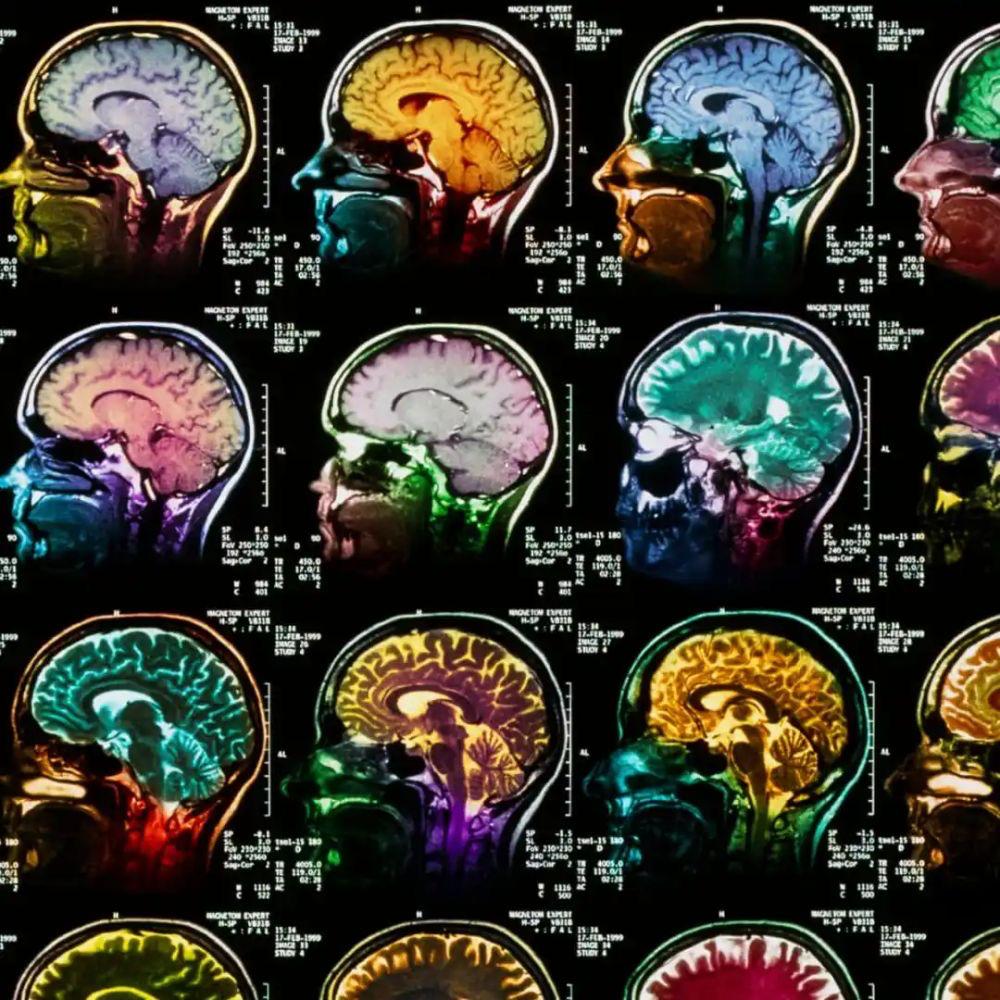
Each neuroscience-informed behavioral proxy maps to specific neural systems so teams can interpret model outputs in biologically plausible terms.
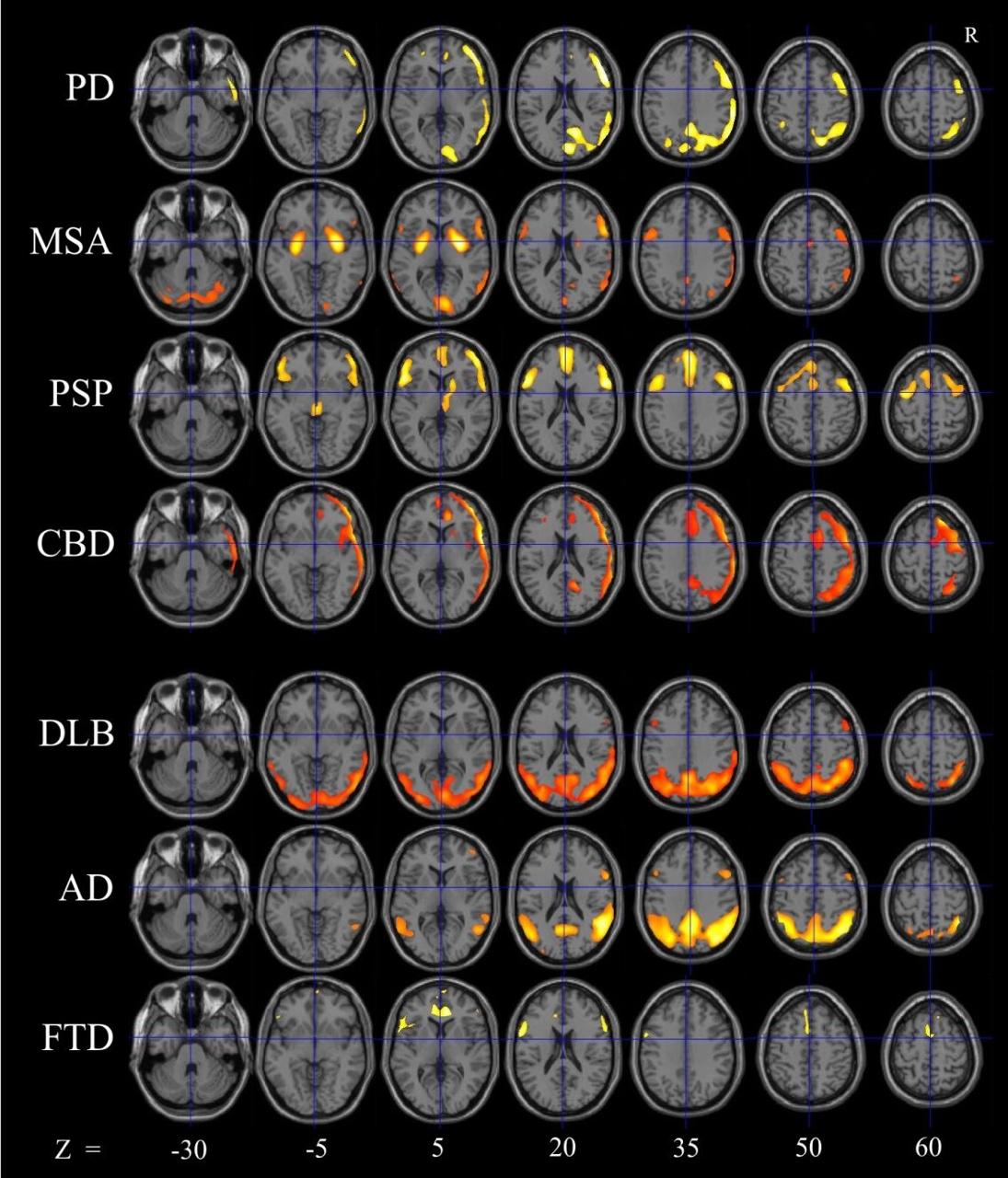
fMRI-informed behavioral proxy
Reward circuits (accumbens, vmPFC, OFC)
Eye Tracking
Visual cortex (V1-V4), FFA, PPA, EBA
GSR / ECG
Autonomic arousal (amygdala, insula, ACC)
EEG-anchored behavioral proxy
Attention networks (prefrontal, parietal)

fNIRS-informed cognitive load proxy (comprehension debt engine)
Cognitive load (DLPFC, anterior PFC)
Facial Coding
Emotion circuits (amygdala, insula, STS)
Buyology's neuroscience-informed behavioral proxies predict likely neural activation patterns using a scoring rubric informed by published neuroscience and behavioural-science literature. These are neuroscience-informed predictions, not clinical measurements.
Our Data Sources
Scores come from a scoring rubric informed by published neuroscience and behavioural-science literature, including journals such as Neuron, Journal of Marketing Research, Psychological Science, and Journal of Consumer Psychology. Key researchers include Pieters & Wedel (eye-tracking), Knutson et al. (fMRI purchase prediction), Cahill & McGaugh (emotional memory), and Reber et al. (processing fluency).
Attention heatmaps use a 6-channel saliency computation based on Itti & Koch (1998) visual attention theory: color contrast, edge density, color warmth, intensity contrast, center bias, and text region detection.
Completed analyses can feed anonymized cohort benchmarks. Industry comparisons require a floor of 50 comparable assets before directional quartile claims; verified percentiles need a larger, uniqueness-gated population. Below that floor, comparison is withheld — not invented.
Our ML Pipeline
Every analysis runs through a three-stage pipeline:
Stage 1: AI Vision Analysis
Claude Sonnet 4.6 examines your creative asset and identifies visual elements, emotional triggers, cognitive complexity, and demographic relevance. The AI is prompted with research context from our database of 30+ neuroscience papers relevant to the asset type.
Stage 2: Literature-grounded scoring
Dimension scores (attention, emotion, memory, purchase intent, cognitive load) come from Claude using a scoring rubric informed by published neuroscience and behavioural-science literature. There is no ONNX blend and no EEG- or GSR-trained calibrator on the live scoring path.
Packaging-specific analysis evaluates shelf differentiation, purchase trigger speed, color psychology, typography readability at shelf distance, material perception, and redesign risk — grounded in packaging research from Clement (2007), Orth & Malkewitz (2008), and Silayoi & Speece (2007).
Stage 3: Behavioral Science Audit
Our AI Creative Director — informed by 42 behavioral science principles with citations from Kahneman, Cialdini, Ariely, Sutherland, and related foundational work — critiques the creative, identifies principle violations, and provides specific fixes with expected impact percentages grounded in published research.
Campaign Intelligence methodology
Campaign Intelligence scores 2–20 assets in parallel, then synthesizes cross-asset patterns on Claude Sonnet 4.6.
- Per-asset scoring — each file runs the full pipeline (literature-grounded dimension scores, 42-principle audit, geographic conditioning).
- Cross-asset synthesis — ranked variants, consistency analysis (visual, tonal, message alignment), and a kill list of underperformers to cut before media spend.
- Deferred Advisor — batch runs stay fast; full advisor depth generates on demand when you open an individual asset report.
- Deliverables — interactive campaign dashboard plus 11-section print-ready PDF exports for client presentations.
How we score
Scores come from a scoring rubric informed by published neuroscience and behavioural-science literature. They are not EEG-grounded AUCs.
Scoring basis
Literature rubric
Scores come from a scoring rubric informed by published neuroscience and behavioural-science literature. They are model estimates, not lab measurements and not EEG-grounded AUCs.
Behavioral science audit
42 principles
Structured creative critique grounded in 42 behavioral science principles, each tied to citations from foundational research.
Our validation trajectory
Buyology outputs are labeled with evidence tiers T1–T4. Tier labels state what each score is (and is not): pattern identification, dataset-bound classification proxy, or stronger claims only when the underlying validation supports them.
We commit to the incremental-validity study documented at docs/validation/incremental-validity-study-protocol-v1.md. The study tests whether neuroscience-informed proxies add predictive value beyond cheaper saliency and heuristic baselines. A public URL will be linked here when the protocol is published.
Study activation triggers: a research grant, paid client sponsorship, or a university partnership that funds panel infrastructure. Until then the protocol stands as a public commitment, not a completed claim.
If the study finds null or negative incremental validity, we will publish those results honestly — including where a simpler proxy is sufficient.
Best used for
- Comparative testing (A vs B) — rank-order creatives and quantify directional lift.
- Pre-launch creative validation — stress-test layouts, packaging, and key visuals before media spend.
- Identifying attention and cognitive friction — where eyes likely go and where processing feels heavy.
- Prioritizing design fixes by neural impact — focus iteration on changes with the largest modeled effect.
Not designed for
Clear boundaries build trust. Buyology Labs is not the right tool for:
Clinical diagnosis
We do not assess mental health, neurological conditions, or medical states. This is marketing intelligence, not clinical neuroscience.
Individual consumer prediction
Scores reflect population-level tendencies from published data — not whether a specific person will click, buy, or prefer an option.
Replacing qualitative research entirely
Virtual neuromarketing complements depth interviews, ethnography, and brand judgment; it does not substitute human context where stakes are high.
Limitations — What We're Honest About
No predictive model is perfect. Here's what you should know:
- Ordering is the strongest claim. NeuroScore reliably orders creatives that differ by 2 points or more (median rank agreement 0.92), measured on SA public retail creative (n=20). Below a 2-point gap, treat the difference as not established.
- Demographic calibration is inference-based, not empirically measured per segment. We don't have separate neural recordings for each LSM tier or province.
- Our attention heatmaps use computational saliency models, not actual eye-tracking hardware. They predict where attention is likely to land based on visual properties.
- Individual variation is real. Our models predict population-level tendencies, not how any single person will respond.
- Intention (not live): we intend to calibrate against customer outcome data when a licence-clear outcome corpus and feedback mechanism exist. Neither exists today — no customer outcomes update the live scoring path.
Validation Roadmap
Planned validation work:
- Planned: reliability studies on a frozen licence-clear regression set (S1). The set is currently empty (T8: 0 eligible assets) — S1 has not run. Blocker: no licence-clear members in the frozen evaluation pool.
- Planned: customer outcome tracking to measure prediction-to-performance accuracy (no live feedback loop yet).
Literature sources
The live scoring path does not train models on datasets. The rubric is informed by published neuroscience and behavioural-science literature. Below are primary sources and where to read the original papers.
Pieters & Wedel (2004)
Attention capture and transfer in advertising — a source for the attention dimension of the scoring rubric informed by published neuroscience and behavioural-science literature.
Knutson et al. (2007)
Neural predictors of purchases — a source for the purchase-intent dimension of the scoring rubric.
Itti & Koch (1998)
Saliency-based visual attention — the basis of the heuristic attention heatmap (not a live EEG model).
Research Citations
- Pieters, R., & Wedel, M. (2004). Attention capture and transfer in advertising. Journal of Marketing.
- Knutson, B., et al. (2007). Neural predictors of purchases. Neuron.
- Cahill, L., & McGaugh, J.L. (1998). Mechanisms of emotional arousal and lasting declarative memory. TINS.
- Reber, R., Schwarz, N., & Winkielman, P. (2004). Processing fluency and aesthetic pleasure. Personality and Social Psychology Review.
- Itti, L., & Koch, C. (1998). A model of saliency-based visual attention. IEEE PAMI.
- Kahneman, D. (2003). A perspective on judgment and choice. American Psychologist.
- Cialdini, R.B. (2001). Influence: Science and Practice.
- Wang, H.E., et al. (2024). Virtual brain twins. National Science Review.